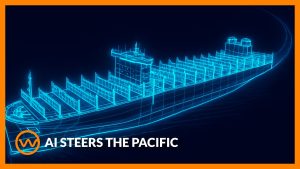

A container ship crossed the Pacific without drama and we are supposed to clap like it is the moon landing. Samsung Heavy strapped its SAS package to an Evergreen 15k-TEU workhorse, sailed from Oakland to Kaohsiung, and fed the press a neat pile of numbers. Ten thousand kilometers. Weather checks every three hours. One hundred and four guidance nudges. Two hundred and twenty-four automated control actions. It sounds scientific until you notice the missing pieces. No sea state disclosed. No traffic density. No exception minutes. A tidy count tells a comforting story and avoids a messy one.
The claim that SAS evolved from collision avoidance into a system that keeps economical speed and makes its ETA is the actual news. That is voyage optimization wearing a cooler jacket. In a year when shipping companies are staring down ETS surrender dates and trying to keep their CII ratings from turning into scarlet letters, a system that whispers “same arrival, less bunker” is going to get invited on board faster than anything that dares whisper “crew reduction.” The regulators will only get stricter and the accountants already did. The timing writes itself.
Samsung’s confidence is not floating on a press release alone. The company has been collecting approvals in principle like merit badges, from LR to ClassNK, and just posted its best operating profit in eleven years. That matters because autonomy in this sector is a tedious campaign of “prove it, certify it, insure it.” Approvals give executives something to wave in front of board committees while they sign off on fleet retrofits and profit gives them the patience to keep chipping. Meanwhile Evergreen’s latest quarter is softer than last year and bunker is still a tax on mistakes, so a headline about AI saving fuel while keeping schedule tastes like aspirin.
Competitors are not politely waiting their turn. Avikus already ran an LNG carrier transoceanic trial and bragged about fuel savings in percent, not vibes. Orca AI just banked seventy-plus million dollars and keeps sprinkling its decision-support across fleets that are not shopping for a new hull. Wärtsilä keeps shipping autodocking to operators who care more about not kissing a pier than about winning a press cycle. If SAS is going to be more than Samsung’s in-house toy, it needs to prove that a shipyard can sell software as convincingly as it sells steel. That is a cultural shift, not a firmware update.
What is artfully avoided is the legal scaffolding. The voyage happened in a world where SOLAS still assumes humans on the bridge and the IMO is still nursing a non-mandatory MASS Code toward something teethy after 2030. So yes, autonomy “worked.” It worked in a window carved out by class, flag, and lawyers with a tolerance for acronyms. That is fine. That is how real adoption happens. Just skip the victory lap until the first insurer puts a discount on an SAS-equipped hull and underwrites the crossing like it underwrites a radar set.
Still, credit where due. A long Pacific leg without headlines is the point. If autonomy keeps being boring while shaving fuel without blowing ETA, the market will quietly flip.
The operator will say it is a routing tool.
The regulator will say it is an efficiency measure.
The tech vendor will say nothing and cash maintenance checks.
Replace the hype with invoices and the job is done.