

Supply Chain Sovereignty and Other Fairy Tales
“There’s absolutely no China in this supply chain. We read the datasheet.”
Of course you did. Because when faced with complex geopolitical entanglement, nothing screams due diligence like believing a document that’s basically the IKEA manual of electronics. “Made in Europe”? Clearly, that includes the spiritually rebranded clock generator that left Wuxi Tuesday and became European by Thursday. It probably picked up a new accent and a culturally appropriate capacitor.
We begin with the most sacred corporate ritual: self-deception. As long as the final screwdriver twist happened somewhere near a European cathedral, it’s fine. We’re sovereign. Never mind that the semiconductors inside came from a factory in the Yangtze Delta with better automation than half of Western Europe. No, what matters is the sticker. The glorious, truth-smudging sticker.
PCB manufacturing in Europe? Oh, it exists, like dial-up still technically exists. Less than 3% of the global share, but hey, quality over quantity, right? Meanwhile, China owns more than half the planet’s PCB output. But if your assembly house is in Hungary, go ahead and write a TED Talk about local supply chains. Sprinkle some “eco-friendly” buzzwords on top. Just don’t mention the shipping invoice that starts with “Shenzhen.”
And chips? Europe wants 20% of global semiconductor market share by 2030. Right now, it’s sitting somewhere between hopeful and delusional. Best-case scenario: they hit around 11%, assuming Taiwan doesn’t catch a cold. Meanwhile, China is going full Hunger Games, throwing $300 billion at the sector like it’s a New Year bonus. They’re not trying to catch up, they’re buying the race track.
Let’s not forget the auto industry. Every time you hear the words “European EV innovation,” remember that more than half the semiconductors inside those cars probably took a scenic route through China. Sure, the factory’s in Wolfsburg, but your sensors had a layover in Guangdong. So yes, that “European technology”? Kind of a group project.
Then there’s the juicy bit: rare earths. You know, the materials that make your clean energy tech work. Magnets, batteries, high-performance motors. Europe’s plan: Hope. China’s plan: Monopoly. Around 90% of refining capacity for these metals is in Chinese hands. You can’t build strategic autonomy on imported gallium. But Europe’s trying. Just as soon as the committee finishes drafting the strategic autonomy white paper. Should be done by Q4 2028.
Meanwhile, America, hardly known for subtlety, is moving its supply chains with actual urgency. Not out of principle, mind you, but because tariffs are basically financial landmines now. If a capacitor so much as whispers “China,” it costs 20% more. So the U.S. is pivoting to India, Vietnam, wherever they can find a non-Chinese work visa. Europe? Still consulting the datasheet.
And oh, the datasheet. Our protagonist. The corporate get-out-of-China-free card. “Country of Origin: EU.” Very official-looking. Never mind that the components took a world tour before reaching that assembly line in Milan. The datasheet says it’s European. Therefore, it must be. Because datasheets never lie. Especially not the ones written by marketing.
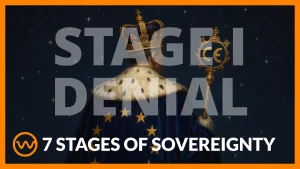
So here we are. Stage I: Denial. The comfiest of all policy positions. The optics are great, the accountability is non-existent, and no one has to admit that their “strategic autonomy” runs on Chinese resistors. As long as no one opens the box, or God forbid, traces a BOM, it’s all fine.
Because supply chain sovereignty is real. Just like unicorns.