

Here’s your slightly cynical, thoroughly caffeinated wrap-up for the satcom week of November 1–8, 2025 a span of days that felt like watching the council of wizards argue over who gets the staff of destiny while the upstart apprentices quietly ship code, bolt panels, and occasionally scrub a launch when a valve decides it wants a personal day. The unifying vibe this week was “multi-orbit pragmatism with a side of D2D theater.”
GEO players reminded everyone they still pay the mortgage, MEO kept polishing its value proposition, LEO did what LEO does (i.e., multiply and conquer) and direct-to-device hopped from proof-of-concept to real services you can point to without a caveat the size of a ground station. Think of it as the industry’s “aging monarch meets ambitious heirs” moment; no one abdicated, but several cleverly adjusted the succession order.
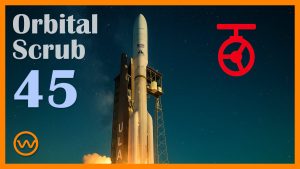
Start with the week’s most visible spectacle because rockets make great punctuation. Viasat’s ViaSat-3 Flight 2 (the Americas-focused F2 super-sized bus designed to more than double the company’s current network capacity) was supposed to ride ULA’s Atlas V during the U.S. evenings of November 5 and 6. Cue two scrubs thanks to a liquid oxygen vent valve with diva tendencies, which is about as on-brand for launch ops as a weather delay in Florida. What matters isn’t the melodrama; it’s that Viasat is back to executing the GEO half of its multi-orbit roadmap with public updates and a clear readiness to turn the dial back to “growth” once the spacecraft is in geostationary orbit and through test.
The company had already nailed down the plan last week in a formal “we’re ready to go” note dated October 31 that set a November 5 target, then followed up with a November 6 launch-status update that acknowledged the slip and reset expectations with the kind of practiced calm you usually see from surgeons and air-traffic controllers. The throughline here is capacity. Viasat’s pitch is that F2 will feed its aviation, government and enterprise pipelines (plus its freshly branded platforms) and begin restoring the narrative after a bruising few quarters.
While planetary-scale GEO capacity was playing “will they/won’t they” on the Cape, SES did what steady incumbents do: publish numbers, lay out traction, and slip in a strategic nibble you’ll miss if you only read the headline. On November 6, SES reported “solid” nine-month and Q3 2025 results, steering the conversation toward disciplined, profitable growth and away from the old anxiety about MEO execution.
The press line is concise; the subtext is richer: SES is using O3b mPOWER to sell high-SLA connectivity where latency and determinism matter, and it’s quietly tightening its Asia portfolio by buying or bartering capacity where customers still expect traditional satellite economics. Two days earlier, on November 4, SES slipped a blog “newsflash” about boosting Asia satellite capacity via SKY Perfect JSAT. That’s not a blockbuster acquisition, but it is how multi-orbit shops win against single-orbit purists: meet demand pockets with the right beam at the right price, whether it rides your spacecraft or a partner’s.
Watching SES this week felt like revisiting that scene where the seasoned general reluctantly shares the throne with an ambitious upstart, then reveals they also have half the regional governors on speed dial. It’s not flashy. It is, however, how you keep hitting quarters while LEO soaks up headlines.
Telesat had the most “surprise, we’re practical” energy of the week. On November 4, it posted third-quarter 2025 results that, on the surface, read like a tough stretch (revenue down year-on-year and EBITDA margins compressed) but baked into the text was what really matters: continued Lightspeed execution and the kind of operational housekeeping that says, “this is a build, not a bet.”
The counter-programming to the accounting story arrived the same day with an unflashy, deeply important press release: a US$5 million strategic investment in Farcast, aimed squarely at integrated, enterprise-class flat-panel terminals for Telesat Lightspeed. If you’ve ever dealt with user terminal programs, you know the monster under the bed isn’t link budget; it’s SWaP-C, integration, and getting a vendor pipeline ready for volume.
Telesat’s note spelled it out: a flat-panel antenna with single-aperture full duplex using AESA, integrated with the Lightspeed modem, with availability targeted for 2027. Translation: the operator is future-proofing terminal supply and performance constraints before they become growth bottlenecks. That’s necessary in a market where too many networks trip over terminal bills of materials.
The investment also reinforces Telesat’s “enterprise-first, deterministic performance” position in a world where best-effort LEO messaging grabs the buzz. Go to Telesat’s November 4 Q3 press and then to the Farcast investment announcement the same day and you’ll see the pieces click into place like a well-written configuration file.
LEO, as usual, refused to stay quietly in the background. SpaceX added another brick to the broadband wall on November 6 with a Starlink launch from Vandenberg, noted in its own mission page with the kind of laconic confidence that comes from doing the thing so many times the verb has become a lifestyle. There’s also another Starlink flight on SpaceX’s official launch calendar for November 8, because of course there is, LEO constellations don’t build themselves.
Whatever one thinks about spectrum etiquette or constellations blotting the long exposure of your telescope, you can’t argue with the cadence. One launch after another keeps average throughput up, drives down user acquisition friction, and quietly normalizes the idea that “broadband from space” isn’t exotic anymore. It’s plumbing.
And if you’re a competitor selling business-critical SLAs, that’s actually a gift, because it lets you reposition your value as “assured performance in the moments that matter” while letting LEO volume absorb the lowest common denominator use cases.
The most meaningful step forward in “phones that talk to space” didn’t come from a satellite operator at all; it came from a mobile carrier leaning hard into the D2D future. On November 5, T-Mobile announced that Text-to-911 is now available off-grid via satellite for any compatible smartphone (yes, even if you’re on a rival network) riding its “T-Satellite with Starlink” Direct-to-Cell backbone.
This is exactly the kind of needle-moving service that takes D2D out of the demo tent and staples it into the public-safety fabric. You can nitpick caveats about delay, coverage, and app behavior (and T-Mobile’s own official explainer makes those clear) but the leap from “we text sometimes under ideal skies” to “you can reach 911 in the wilderness” is an adoption accelerant that no slide deck can match.
It also reframes the D2D competitive landscape. Rivals who remain in extended “we’re testing” mode will be measured against this baseline, while satellite operators partnering behind the scenes get a proving ground at national scale. And yes, the messaging includes the appropriately swaggering comparisons to other carriers’ timelines because it’s T-Mobile; the point stands: this is commercial D2D at the service level, not just packet plumbing.
Iridium, meanwhile, decided that IoT should stop waiting politely for terrestrial coverage maps to match marketing posters. On November 4, it announced a partnership with Vodafone IoT to integrate Iridium NTN Direct, a 3GPP-aligned NB-IoT direct-to-device service aimed at 2026 commercialization. The Vodafone side posted its own announcement on November 3, an elegant reminder that global IoT at useful scale is a carrier problem as much as a satellite challenge.
The subtext is crucial: this is standards-based NB-IoT stitched into a Tier-1 IoT platform, meant for mundane but mission-critical things like pipeline monitoring, marine tracking, and industrial telemetry in dead zones. It’s the opposite of flashy, and that’s what makes it important. If you want to change the unit economics of connecting “everything,” you don’t ask customers to swap radios or invent new control planes; you show up inside the stack they already use.
The week’s D2D narrative therefore had two poles: T-Mobile carving out emergency messaging and satellite-ready apps for consumers, and Iridium/Vodafone building the globetrotting IoT fabric enterprises actually buy.
Globalstar took the quieter route but arguably closed one of the more strategically telling loops. On November 6 it released Q3 2025 results, the investor-friendly way of confirming that the Apple-powered services flywheel keeps turning, and just three days earlier it disclosed a major expansion of its Brazilian ground infrastructure, adding eight new C-3 antennas across four sites.
This is a classic “own the ground to own the service” move in a region that mixes dense metropolitan clusters with very large, very remote resource and logistics corridors. If you’re building a revenue story that depends on iPhone SOS features, roadside assistance via satellite, and the latent demand from ruggedized enterprise users, planting downlink steel where it improves latency, resilience, or jurisdictional control is how you tighten the experience.
It’s also a reminder that D2D’s magic trick doesn’t end at the sky; if the return link lands in a suboptimal place, performance and compliance follow suit. Globalstar’s investor page carried the November 6 results; the Brazil antenna expansion was posted November 3. Together, they read like a company that knows serendipity favors the prepared ground segment.
If you live in the managed-services trenches where oil rigs, ships, and far-flung enterprise sites need networks that don’t throw tantrums during monsoon season, the week gave you a concrete proof point: Speedcast said on November 5 that it has integrated Starlink’s Global High Throughput Service into COSL Drilling Europe’s hybrid solution.
That sounds incremental until you stare at the implication. We’re operationalizing LEO HTS as a first-class citizen inside fleet connectivity architectures that have to juggle backhaul determinism, app whitelisting, and IT/OT separation without turning the bridge into a NOC cosplay. The customer here is telling, too. Semi-subs don’t suffer fools (or flaky links) for long. If they’re comfortable letting a managed provider blend LEO HTS into their profile, we’ve crossed out of the early-adopter era and into normal procurement. The release came straight from Speedcast on November 5, and it reads like a field report from the place where service-level objectives meet wave height.
Regulatory-wise, nothing detonated on the dais between November 1 and 8, which frankly is a blessing. But the week’s product and service launches are best read against the background radiation of the FCC’s ongoing “modernize all the things” campaign that has been percolating since mid-year. Baseline earth station licensing and notification-based changes are reshaping the cost and complexity of running ground networks in the U.S., which matters when your business case assumes you can spin up or reconfigure gateways at something approaching cloud speed.
You could feel that subtext in how fast D2D services are moving from test-pilot to consumer-facing. And while not a this-week filing, it’s impossible to ignore how earlier FCC actions on SpaceX’s Gen2 authorization and SCS modifications have green-lit enough E-band and D2D plumbing to make the T-Mobile move feasible at scale, with all the usual “subject to conditions” fine print designed to keep peace with passive users and incumbents.
In other words, the week’s seemingly effortless announcements are standing on a lot of policy scaffolding. That scaffolding isn’t sexy, but it’s what keeps you from falling when the market gusts.
Nevertheless (and with a wink at a certain space opera that taught us not to underestimate farm kids or small droids) the trajectory is encouraging. This week showed an industry less obsessed with proving it can do impossible things and more focused on doing necessary ones at scale. GEO is not only alive; it’s tuning for an encore. MEO is shifting from potential to predictability, which is how you get the boring, beautiful revenue curves that finance chiefs frame on the wall.
LEO continues to be the metronome of capability, setting the beat that everyone else has to dance to whether they planned to or not. D2D, in the span of a week, delivered one consumer safety service you can’t argue with and one enterprise pathway that looks like the new default for IoT outside the grid. And the VSAT and managed-service crowd kept hauling real businesses into the multi-orbit present without writing sonnets about it.
So, the week in one last quip before we roll credits. If 2023–2024 was the trilogy where everyone swore they were the chosen one, the first November week of 2025 looked like the spin-off series where the ensemble cast actually gets the job done.
The valiant monarchs of GEO didn’t abdicate; they updated the castle and hired better couriers. The street-smart heirs of LEO didn’t burn the throne room; they built a city outside its walls and installed municipal fiber. MEO kept the trade routes safe. D2D, finally, stopped being an elevator pitch and started being that emergency button on the wall that, blessedly, works. And the integrators kept the lights on, because someone has to.
As a forecast, consider this a high-confidence call: more of the same, only faster. Expect F2 to clear the tower soon enough, expect SES to keep quietly triangulating revenue, expect Telesat to keep wiring the terminal ecosystem before anyone misses a ship date, expect SpaceX to launch again on Saturday because it’s Saturday, expect T-Mobile to add capabilities and competitors to announce “me-too” timelines with creative definitions of “Q,” expect Iridium and Vodafone IoT to begin onboarding the kind of early adopters who make standards sticky, and expect Globalstar to keep strengthening the ground where it matters. In other words, keep your helmets on and your service policies tidy; the future remains bright, and occasionally sarcastic.
And because tradition demands we end with a mix of sincerity and snark: here’s to a week where the industry kept its head down and shipped, even when physics and valves tried to make things interesting.
May the next seven days bring fewer scrubs, more terminals, cleaner handovers, and just enough drama to keep the plot moving,
but not so much that your NOC goes dark.



The untold story – behind each of these news flashes heralding moderate to severe optimism is a list of contributing-vendors that are hemorrhaging money while trying to meet unrealistic (unachievable) technical, manufacturing and delivery goals set by the primes. It seems as though the only way the business plans of these mega-programs work is if everyone on the team is wearing deeply-tinted, rose colored glasses. But in the end – it’s all about the math.