
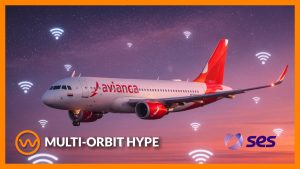

https://www.ses.com/press-release/ses-abra-group-launch-multi-orbit-inflight-connectivity
SES and Abra want you to know the future has arrived, and it apparently showed up on exactly ten A320s. The press release calls this “launching” a multi-orbit inflight connectivity service, which is a wonderfully elastic word when the real milestone is “one aircraft is live, more are planned, please clap.” The document sells certainty while hiding the two things that make inflight Wi-Fi either a delight or a complaint factory: how it performs under load, and who gets blamed when it does not.
The most revealing part is what SES refuses to name. It talks about a “partner’s” LEO constellation like the partner is an optional accessory, then industry coverage says the quiet part out loud: the LEO side is OneWeb via Eutelsat. That matters because SES’ own positioning pages spend plenty of time explaining why its heart belongs to GEO and MEO, while treating LEO as a buzz storm caused by “high-profile companies” launching thousands of satellites. Translation: SES wants the LEO glow without the LEO burden. So it borrows it, then writes the press release like it invented the sunlight.
Then there’s the antenna. SES calls it “SES’ new electronically steered array,” which sounds like an in-house breakthrough until you learn it’s the Sidewinder terminal from Stellar Blu, now owned by Gilat. This is not a minor attribution quibble. Hardware supply, certification, and manufacturing capacity dictate whether “100 aircraft” is a real program or a slow drip of installs that never hits the press-release finish line. Gilat’s own messaging around backlog and ramp hints at why this layer is so valuable: it is the choke point.
Abra’s role here is simple. It is acting like a group that wants to look stable, modern, and investor-ready while it reshapes governance and explores the IPO path. Passenger Wi-Fi is a safe story because it is visible, monetizable, and easy to frame as “experience,” even when the real driver is ancillary revenue and brand insulation. SES benefits because post-Intelsat it needs Mobility wins that look scalable. Everyone gets a headline, and the hard parts get pushed into “forward-looking statements,” right where unpleasant truths go to hibernate.

SES: Sovereignty With Stock Tickers