
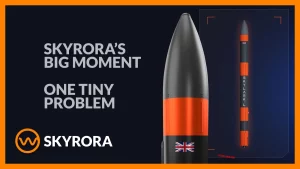

No Launch Pad
Skyrora, the UK-based rocket builder, has officially secured the UK’s very first launch operator licence for a commercial vehicle. Cue patriotic chest-thumping and government soundbites. The Civil Aviation Authority (CAA) finally gave the green light, allowing Skyrora to legally launch its suborbital Skylark L rocket from British soil. That’s right, we’re technically ready for liftoff. Emphasis on technically.
There’s just one minor hiccup: there’s nowhere to launch from. Turns out the very spaceport Skyrora plans to use, SaxaVord in the Shetland Islands, doesn’t have any pad availability for the rest of 2025. And probably not before 2026. Yes, the same SaxaVord that’s never hosted an actual launch. You can’t make this up.
Meanwhile, Orbex and Rocket Factory Augsburg (RFA) have already swooped in, claimed SaxaVord’s early launch slots, and cozied up with the UK government in the process. Orbex even snagged around £20 million in government support and a warm ESA endorsement while Skyrora, ever the bootstrapping overachiever, refused public funding and now finds itself holding a licence it can’t yet use.
Of course, Skyrora’s leadership spun the news like champs. CEO Volodymyr Levykin praised the long, arduous regulatory process, thanked the CAA for its diligence, and reminded everyone that sovereign launch capability is vital not just for commercial growth, but also “from a strategic defence consideration.” Translation: look how helpful we are, please don’t forget about us when the next funding round opens.
Scottish Government Minister Richard Lochhead chimed in to call it a “landmark moment” and a huge boost for Scotland’s space ambitions. He skipped over the fact that the landmark currently leads to an empty launch pad with no opening in sight. It’s a win, sure, but one with very long lead times.
Skyrora, to its credit, isn’t sitting still. The company is looking to leverage its mobile launch system and take its rockets abroad. Iceland hosted its last suborbital attempt (which didn’t fully succeed), and now Australia, Oman, and Norway are on the radar. Basically, if the UK can’t host a rocket launch, Skyrora will find someone else who can.
There’s a touch of tragicomedy here. The UK has a space strategy that talks a big game about sovereign launch capability, innovation, and environmental responsibility. Yet the infrastructure’s still half-built, the slots are already spoken for, and the political will seems oddly skewed toward a competitor. What we’ve really built is a metaphor: a rocket licence without a rocket pad. A space programme that’s still figuring out how to get off the ground.
In fairness, this isn’t all doom and gloom. Skyrora’s flexibility might actually turn into an edge. While Orbex is tied to UK soil and SaxaVord’s delays, Skyrora can pack up and go wherever there’s tarmac and government enthusiasm. Being able to set up shop in multiple geographies might make the company more resilient in the long run, especially if the UK continues to trip over its own bureaucratic shoelaces.
So yes, the licence is a milestone. It’s also a mirage until the launch infrastructure catches up. Until then, Skyrora will likely become the UK’s most travel-savvy space startup, orbiting the globe in search of a functioning launchpad.