

Aug. 5 the Space & Missile Defense Symposium – Huntsville AL.
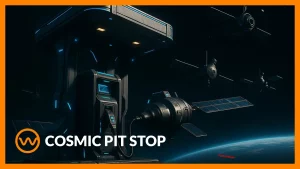
Let’s give Space Force General Stephen N. Whiting some credit for jazzing up what usually feels like a snooze-fest at military space conferences. He suggested we turn the geostationary belt into a cosmic version of the local petrol station, complete with tanker trucks and nozzle jockeys refueling high-flying satellites.
Meanwhile, China quietly performed what looked very much like an orbital fuel-transfer rehearsal, guiding two of its spacecraft side by side more than 36,000 kilometers above Earth. That maneuver shifted the conversation from theoretical engineering exercises to the urgent reality of in-space logistics.
On the commercial side, a handful of startups have been polishing the hardware needed to make this gas-station fantasy real. One Colorado-based company has been conducting tests on refueling ports designed to snap onto satellites in orbit. It recently secured a substantial contract with the U.S. Space Force to turn those prototypes into working units, and its newly expanded advisory board, staffed by retired generals, suggests that Capitol Hill is starting to wager big on private industry doing the heavy lifting.
If you happened to blink back in 2019, you might have missed Canada’s own plan for serviceable satellite depots. That proposal was shelved after a major acquisition but scraps of its design have since resurfaced in various startup ventures.
Data analytics firms that track spacecraft movements have also stepped into the limelight. One of them quietly monitors a majority of the big communication satellites and was the first to black-box record the Chinese pair drifting close enough for a refueling attempt. These surveillance experts rarely get credit, yet their software serves as the early-warning system that could tip the strategic balance. Without their real-time feeds, nobody would have noticed the pump nozzle practice until the first actual propellant transfer.
It’s easy to dismiss this whole scenario as a sci-fi power grab. In reality it’s about practical advantage. Refueling capability means satellites can be topped off, repositioned, or even sent on surprise inspection missions without a fresh rocket launch. Whoever figures this trick out first gains a near-permanent edge in geostationary operations. The U.S. aims to showcase a working space gas station by the middle of the decade, but conflicting budget priorities and interagency turf wars threaten to delay the debut.
At its core, General Stephen N. Whiting’s vision signals an evolution of space from a passive theater of observation into a contested supply line. Satellites won’t simply orbit until they die of old age. They will be serviced, upgraded, or repurposed on demand. If U.S. planners drag their feet, rival powers will extend the life of their constellations while ours grind to a halt. In that future, failing to fuel up could mean more than a blackout over Boise. It might mean surrendering control of the heavens to whoever remembered to bring the hoses.


SES: Sovereignty With Stock Tickers